
The Linn Isobarik (affectionately known as "Briks") is one of the most legendary and polarizing loudspeakers in high-end audio history. Launched in 1973 as the companion to the iconic Sondek LP12 turntable, it remained in production until 1992. It is famous for its massive scale, unconventional driver layout, and its ability to produce deep, "physical" bass that few speakers of its size can match.
1. The Core Technology: Isobaric Loading
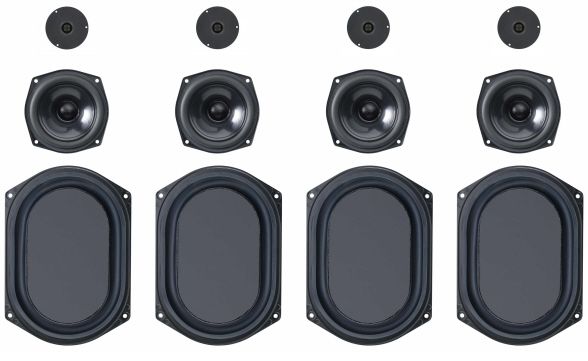
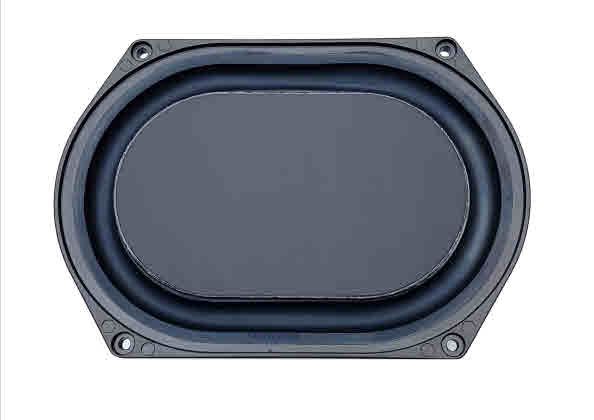
The speaker takes its name from the isobaric principle. In a standard speaker, the woofer fights the air pressure inside the cabinet. In the Isobarik, Linn mounted two woofers (the famous KEF B139 "racetrack" drivers) one behind the other in a sealed chamber.The Benefit: Because the two drivers move in unison, the air pressure between them remains constant (isobaric). This effectively "tricks" the front driver into thinking it’s in a cabinet twice its actual size.The Result: You get the deep bass extension of a massive refrigerator-sized cabinet from a much more manageable (though still heavy) floorstanding box.
2. The Unique "6-Driver" Layout
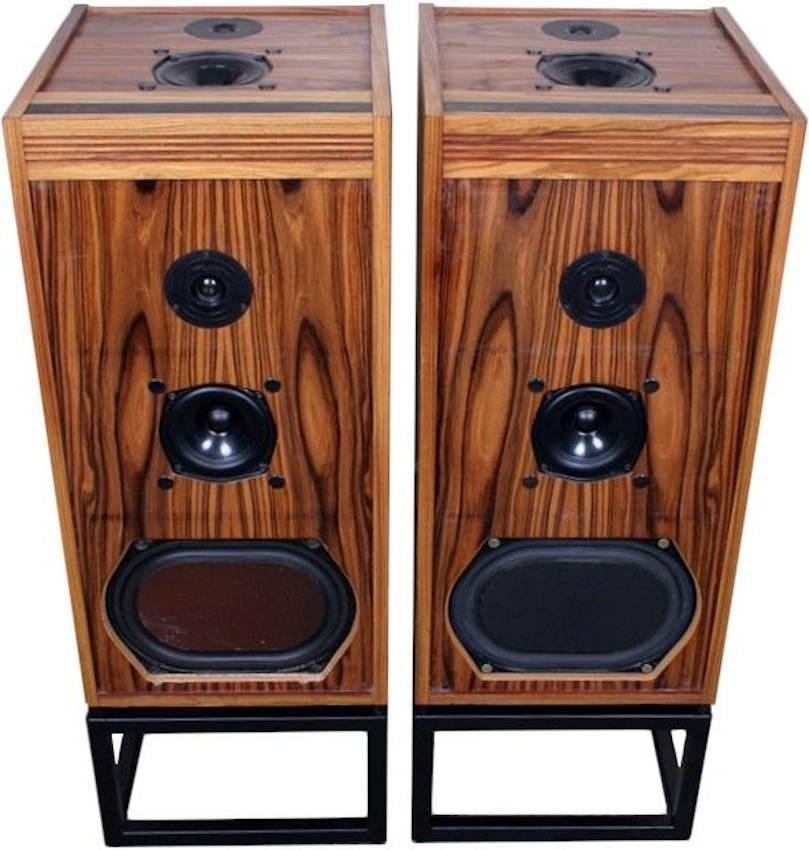
Each cabinet contains six drive units in a 3-way configuration, but they aren't all where you’d expect them:Front-facing: One tweeter, one midrange, and one woofer.Top-facing: A second tweeter and a second midrange driver fire directly upward.Hidden: The second "isobaric" woofer is mounted inside the cabinet, behind the front-facing one.The upward-firing drivers were intended to create a more omnidirectional soundstage and aid in room dispersion, though this often led to the famous "Linn sound"—extraordinary timing and "PRaT" (Pace, Rhythm, and Timing) at the expense of pinpoint stereo imaging.
3. Key Versions: DMS vs. PMS
If you are looking at the vintage market, you will encounter two main designations:DMS (Domestic Monitor System): Features an internal passive crossover. It’s "plug and play" with a standard stereo amplifier, though it is notoriously difficult to drive due to its low impedance (around 4 ohms).PMS (Professional Monitor System): Designed for active operation. It has no internal crossover. To use these, you need an external active crossover and at least three stereo power amplifiers (or six mono amps)—the legendary "6-pack" setup.
4. Characteristics & Quirks
Wall Placement: Unlike most high-end speakers that need "breathing room," the Isobariks were designed to be placed hard against the back wall.Amplifier Killers: They are incredibly demanding. To get the best out of them, you historically needed high-current amplifiers from Linn or Naim (like the NAP 250 or 135).Build Quality: They are "built like tanks," weighing about 43kg (95 lbs) each. Early versions used silicone sealant for the drivers, making repairs a messy, "surgery-like" endeavor.