
KEF Calinda Restoration
The KEF Calinda
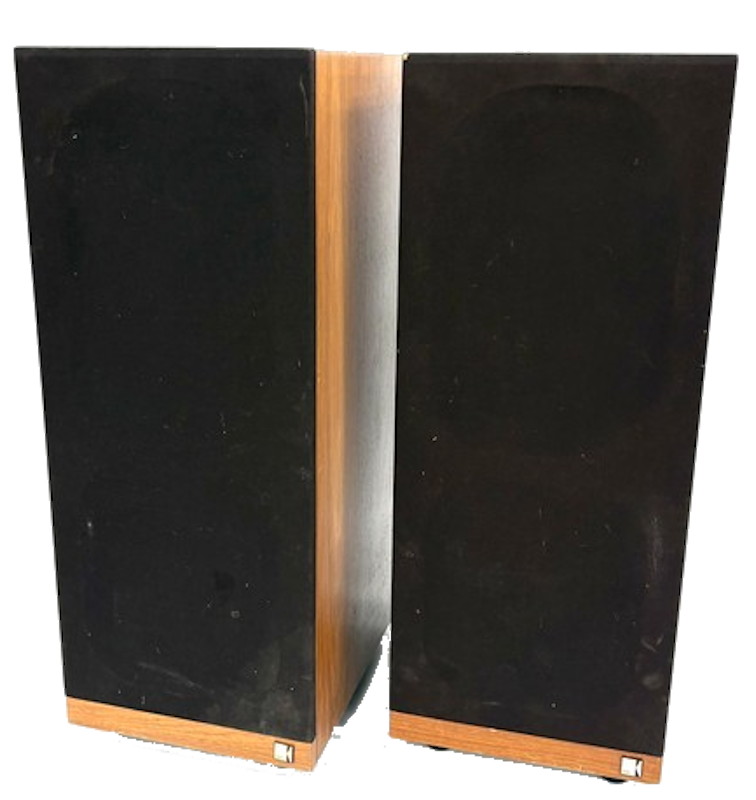
The KEF Calinda (Type SP1053) is a classic 1970s floor-standing loudspeaker known for its high-fidelity performance and "English" sound profile. Structurally, it is a two-way system that utilizes a passive radiator to extend low-frequency response without the turbulence of a traditional port.
The Cabinet Construction
- Enclosure Type: It uses a Passive Radiator design. Unlike a ported (bass reflex) box, it is completely sealed to the outside air, using a non-powered driver to move in sympathy with the internal air pressure.
- Dimensions: Roughly $700 \times 280 \times 350$ mm.
- Build: High-density chipboard with internal bracing and bitumastic damping panels to reduce cabinet "coloration" or resonance.
- Aesthetics: Usually finished in walnut or teak veneers with a distinctive knit-fabric grille.
The Components
The Calinda is famous for using some of KEF’s most legendary individual components:
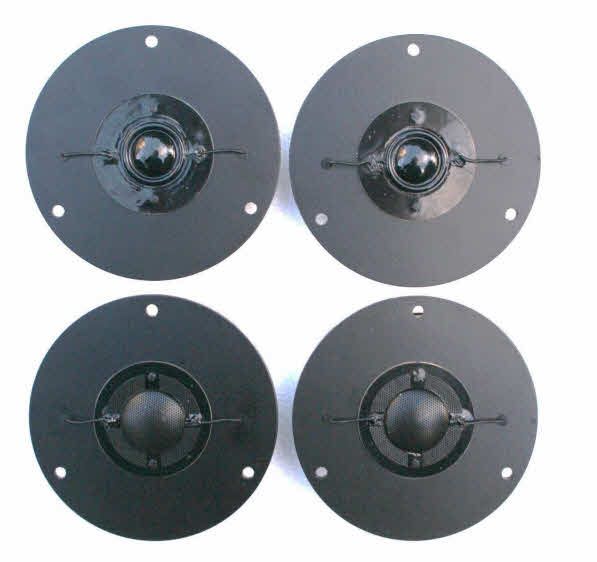
Tweeter (T27 / SP1032): A 19mm Mylar dome tweeter. This is the same tweeter used in the world-renowned BBC LS3/5a monitors. It provides the speaker's detailed and airy high-end.
Mid-Bass Driver (B200 / SP1054): An 8-inch (200mm) "bextrene" cone driver. This handles everything from the mid-range down to the upper bass.
Passive Radiator (BD139 / SP1042): Often mistaken for an oval woofer, this is the "racetrack" shaped diaphragm at the bottom. It has no magnet or voice coil; it acts as a drone cone to reinforce deep bass frequencies (reaching down to roughly 45Hz)
Internal Components
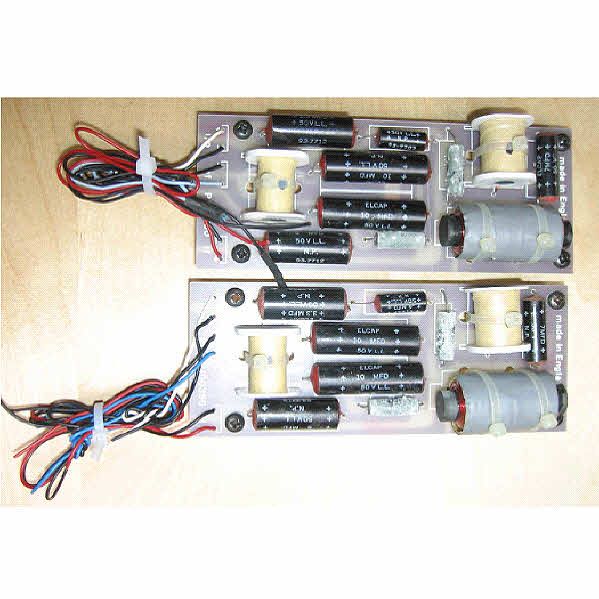
Crossover (DN15 / SP1055): A complex multi-element filter network. It is designed to seamlessly transition the signal between the B200 and the T27, usually at around 3.5kHz.
Damping: The internal cavity is heavily stuffed with acoustic foam or long-hair wool to absorb standing waves.
Connections: The rear panel typically features a simple two-terminal "screw or plug" interface, as bi-wiring was not a standard practice during its production era (1976–1980).